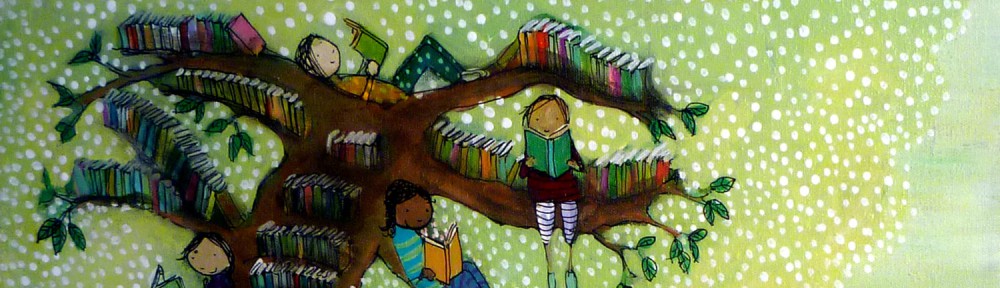
In this slice, I reflect on this thirty-one day challenge by harkening back to the unknowing mentors who have guided and informed my writing practice.
 Like many new slicers, I can’t believe I actually completed this challenge. As I face my final day, I am humbled by the moment. When I started the month, I made a list of potential topics. As I checked off those items, I mined my notebooks for inspiration and also tried techniques from other slicers. One quote that caught my eye for this culminating post is from Lucy Calkins, shared during one of the summer institutes. She asked us, “Can you feel yourself changing as a writer?” That got me thinking back with a wider lens on how my writing life has evolved.
 Prior to my teaching life, I’d always been an avid reader and writer. When my children were very young, I’d wake up at 4:30, grab my journal alongside a cup of coffee, and head outside my front door to my writing corner on the porch. Two wicker chairs and a small glass top table became my sacred space. Whether it was my path toward Simple Abundance, The Artist’s Way, The Purpose Driven Life, or nature’s bountiful gifts – writing was my refuge. There I mused, responded and explored my hidden fears and truths. In many ways, it became my religion. My reading choices reflected a similar path – all culminating with my decision to answer the call to teach. Who knew I could get paid for spending a life immersed in reading and writing!
When I switched careers from business into teaching, I was fortunate to have a professor who lived in Manhattan, and who had her eyes and ears on the Teachers College Writing Project. Lucy, Nancie, Ralph, and Carl were all required reading, and Heinemann was our go-to source for all things literacy. Therefore, when I began teaching, I only had the workshop model as my frame of reference – lucky me!
 Three years into teaching, I attended my first summer institute in 2008. Since then, my writing life has expanded along with my mentors. Mary Ehrenworth and Colleen Cruz became my first choices at subsequent summer institutes. I have notebooks filled with their wisdom, which I regularly visit for inspiration. In that caliber of people, I’ve been blessed to add Katherine Bomer, Amy Ludwig Vanderwater, and Vicki Vinton to my growing list of writing teachers. My heart is full and I am grateful for their commitment and steadfast beliefs in honoring the art and craft of writing.
 Reflecting back on that section with Lucy, she was discussing the power of conferring, and noted the importance of remaining present, in order to “be at the boundary” of a child’s readiness. Today, I am feeling like that child – on the brink of something new. Although I created this blog two years ago, I only posted twice even though I had eleven unfinished drafts in cue. The habit of writing every day has provided me with a renewed sense of joy anticipating what might come next. Suddenly, posting a Slice of Life every week, no longer feels daunting. I not only want to participate, but I need to participate.
To have the support of an entire community within the guidance and framework of the Two Writing Teachers, is truly a gift. I am at a loss for words to effectively communicate how this challenge has empowered me. Thank you for encouraging me on this journey into writing.





 Today, I thought I would share a bit about the book I am currently reading. As a lover of historical fiction, I downloaded a copy of Kate Hannigan’s The Detective’s Assistant, which is about the true adventures of Kate Warne, America’s first female detective hired in 1856 by Pinkerton’s National Detective agency. In her role, Kate travels all over the country on a variety of cases, but becomes well known for her work in thwarting an assassination attempt on President Lincoln as he made his way by rail from Illinois to Washington, DC.
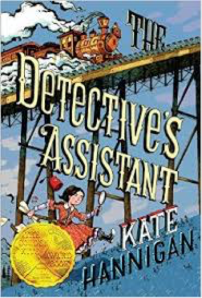 The story is told through the eyes of Nell Warne, Kate’s orphaned niece, who moves in much to the surprise and dismay of her aunt. At eleven years old, Nell is a fictional character who tells the story of their detective adventures as well as the history that is unfolding. Through letters to her African American friend, Jemma, the reader is privy to the impact of slavery and the work of the abolitionists on the Underground Railroad. Beyond the incredible history and well crafted narrative, I am enjoying the use of dialect alongside sophisticated language. I was highlighting and book-marking so many pages on my Nook, I decided to stop and simply enjoy the story.
 Thankfully, I was raised to believe I could choose any career I wanted. Although my mother’s opportunities in the corporate world limited her to remaining as a Girl Friday, my twenty-two year career in business culminated as a project manager for a fortune fifty corporation. And when I decided to switch careers into teaching, I pursued the workshop model and after eight years of teaching, I moved into coaching. During Women’s History Month, I’m grateful to women like Kate Warne, Harriet Tubman, Elizabeth Stanton, Amelia Earhart, Lucy Stone, Elizabeth Blackwell, Rosa Parks, Dorothy Day, Eleanor Roosevelt, Maya Angelou, and Sandra Day O’Connor, pioneering women who found their strength and voice to rise above their circumstances and create change. A generation of women thanks you for your unbridled passion, courageous heart, and unyielding spirit.
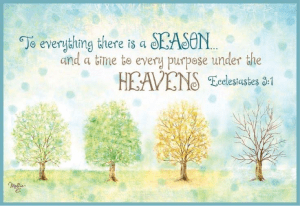 One undisputed fact is that the 1960’s was an era of great music. Mirroring the turbulent anti-war protests, there were some poignant folk songs sung in the streets, at festivals, and in our churches. With a single acoustic guitar, I remember hearing The Byrds, “Turn! Turn! Turn!” in our own church, which is based on scripture from Ecclesiastes, a personal favorite. A decade born with hope, quickly turned violent with the assassinations of John and Robert Kennedy along with Dr Martin Luther King. Instead of withdrawing from the war, we accelerated our efforts and began drafting young men, boys really. Although we were only in elementary school, my brothers and I watched the draft with our parents, worried for other families affected. When I switched careers in my forties, and returned to college to complete my English degree, I took a writing course, where we explored literature about that time. Tim O’Brien’s book, The Things They Carried, still lives in my heart as I was finally able to articulate the emotions I suppressed as a child in that season of war.
 When I was in 7th grade, one of our classmates died mysteriously. In our small school community, with only one class per grade, we were close. Michael was ill during a terrible epidemic of the flu, which afflicted me as well. I remember our phone rang and my mother shared that it was a prayer chain for Michael… I am certain she was worried about me, which is why I remained home longer than usual. When I returned to school, my classmates and I insisted on singing at Michael’s funeral mass, customizing the lyrics to “Seasons in the Sun.” On the day of the funeral, when Mrs. Hinks played the first key, we were stunned into silence. Although we started to sing, one by one, our voices dropped out of the chorus, and we were unable to finish. I always think about Michael’s parents and how they might have felt that day… already torn up by the loss of their son, and hearing the pain articulated with the sounds of our mourning, must have been heartbreaking in that season of loss.
 for its voice and words. Although I had known my husband eight years before we married, and loved him dearly, I also lived through the divorce of my own parents, and understood the commitment and challenge of marriage. The lyrics of this song evoke a sense of trust, and serve as a reminder to constantly seek spiritual guidance throughout our season of love.

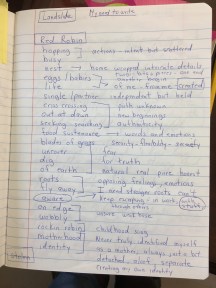 The next morning, Georgia Heard gave the keynote on the Columbia campus. Afterward, I found the nerve to approach her to share my discoveries and gratitude for the idea. With a poet’s eye, she was genuinely intrigued. Although that breakthrough helped me to draft a writing piece, I decided to return to it today and try my hand at poetry.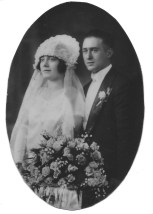


 Because we only lived twenty miles outside of New York, most of us were fortunate to enjoy the sights and artistry of the city. My aunt treated me to the ballet and the theater, my dad to sporting events and my older cousin to concerts. So it didn’t take me long to agree with Kim when suggested we head into the city to try and see “The King and I.” At fifteen and sixteen, we had it all figured out. I told my parents that Kim’s older cousin was going to take us, so we would be with an adult. Kim’s mother, who was a bit more hip, gave Kim permission as long as we took her younger sister, who was twelve going on twenty – shocking, I know. The three of us, along with another friend, hopped on a bus and into Port Authority to begin our adventure. Mind you, this was the seventies, before Mayor Giuliani was elected and cleaned up 42nd street, so the sights and situation were slightly dangerous and less than ideal.
 First stop, was to Times Square to the TKTS booth to scope out tickets for prized shows. Although there wasn’t anything available for “The King and I,” we did purchase balcony tickets to see “Chicago.” As show time drew near, we headed over to the theater and into our seats. From our view at the top, Lisa, the other friend, swore she spotted Eric Clapton in the audience. We also noticed four open seats in the orchestra, that remained empty after the first act. During intermission, we headed down and slipped into the “open” seats.
 When the curtain rose during Act II, one single light illuminated a dark stage, and the person on stage announced “All the lights are out in the city!” The audience laughed, assuming it was part of the show. The actor shared again, “No. I’m not kidding. New York City is experiencing a major blackout. Please look to the ushers who will lead you out through the exit doors on the side.” The audience gasped in unison. A previous hushed crowd began speaking in louder whispers, slight panic in their voices. For some reason, the emergency lighting did not work, so little by little people began igniting lighters to guide the way.
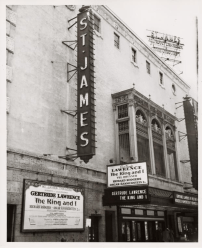 The four of us held on together hand to shoulder in single file. Once out on the street, we discovered that bus service in and out of the city ceased. Port Authority was too dangerous, and at the moment, off the grid. We were definitely in a bind. Thinking quickly, we slipped into the St James Hotel, which was across the street near our theater. Luckily the pay phones were working, so Kim called her mother, who notified me that my mother was frantic! Oh boy, how was I going to get out of this one? She told us that her uncle was in the city, singing at a night club. As soon as he could retrieve his car, he would pick us up.
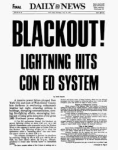 Meanwhile a small crown was gathering in the hotel lobby. As it turned out, many members from the cast of “The King and I,” were staying at the hotel. Putting on their usual, the “show must go on faces,” they led us in songs from the show! What a treat. Although my nerves were shot, fearing what awaited me at home, my spirit soared in singing those show tunes. There may have been mayhem on the streets with unnecessary looting and crime, but inside the cocoon of the St James Hotel, we were serenaded and nurtured into calm.
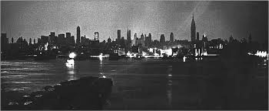 A few hours later, Kim’s uncle picked us up. The eeriest sight was the view of the New York skyline blacked out against the summer sky, as we emerged from the helix of the Lincoln Tunnel. Instead of bringing us home, he took us to another club in New Jersey to visit a friend! The party continued until I got home and faced the music from my parents. Just another teenage angst to add to the story of my life.

 The Author's Purpose