Nun of This & Nun of That #SOL17

Not unlike other Irish/Italian families, parochial school was a standard; better to have the nuns deal with the messy work of discipline, especially with the Tafuni children. Everything you’ve ever heard about Catholic school is true – I swear it! 

StJamesSchoolTwo years ago, I joined a handful of schoolmates at a 40th class reunion. Not for high school or college, but for St James, my elementary school. Diane, my best friend at home and school, organized the informal outing. Having spent eight years together, my classmates and I were close, not always in friendship, but united in our mutual respect and disdain for corporal law, the discipline of Catholic School. The rules were so strict, that many of us found it more fun to find ways around them. Laughing out of control simply because we felt so stifled by the controlling environment, that when were in trouble, our laughter grew worse.

ChurchHumorRight from the beginning, we were taught about guilt and warned about punishment. Following our First Penance in 2nd grade, we joined the rest of the students attending confession every First Thursday of the month to purify our souls for First Friday mass. Each grade had an allotted time slot, so the priest wouldn’t be overwhelmed by the web of lies ready to assault him. As we stood in line waiting for our turns, we discussed the transgressions we would make up. I said, “I’m going to tell him I fought with my brother five times.” Diane shared, “I’m going to tell him I pinched my sister by accident.” Colleen mused, “I’ll say I disrespected my mother twice.” Siblings were lower than parents on the commandment scale, so we had to be careful to weigh out the sin against the expected penance. Even though we all “used the Lord’s name in vain,” we would never admit it! That one topped the list.

Most of the punishments far exceeded the crime. This one in particular had me in tears. Joe and Carl were dueling with the water from opposing fountains, the old white porcelain ones, where the knob could be hyper-extended causing the water to leap out of one side all the way over to the other. Typical, self-absorbed adolescents, they weren’t smart enough to realize they were only twenty feet away from the principal’s office. It didn’t take long SisterRulerfor Sister Barnabas to step out to investigate the commotion. The punishment? She pulled them close, face to face, and using their neckties, she tied them together to the pole outside the restrooms, publicly humiliating them, while sending a message to the rest of the potential rule-breakers… not even kidding!

Another time, in 2nd grade, David told on Glenn for some minor offense. As a result, David, the tattler wore the tattle tail for the rest of the day. In 3rd grade, Mrs. Drexler asked Donna to be the monitor, and to write down the initials of the children who were talking during the day. Right before the bell rang, she stood up front to snitch on her classmates – poor kid.  As soon as she landed on LT, yours truly, Laurie Tafuni, I defiantly shouted, “That’s not me, that’s Lucy Tomallo!” Mind you, Lucy was the quietest girl in the class. The punishment? I had to stay after school, write an apology to the teacher and class, and write on the blackboard, I will not call out in class. No warning for my parents, or my brothers who would be waiting for me by the bus. Case closed.

One of the more humorous crimes occurred off school premises. Even though Diane and I rode the bus, and were expected to eat lunch in the cafeteria, our friend Colleen was a walker, and wanted us to join her at her house instead. Sister Barnabus was more than eager to approve permission, hoping for some peace and quiet in the middle of the day. CozyOn our way back to school, we regularly headed over to Cozy’s Candy Store, an “off limits” location for the St James students, as it was considered a drug den – not kidding. There we would fill the pockets of our uniform vests with candy and sneak it into our mouth all afternoon. One day we were greeted by Sister Barnabus, who got wind of our daily outing. Already in the middle of our purchases, Lou, the shop owner, saw her coming and hid Diane and Colleen behind the counter. Not paying attention, my hand was reaching for some sweet tarts, when I noticed a black and white sleeve come across my shoulder led by a gnarled hand headed straight for mine. Sister B marched us back to school. While Diane and Colleen were smirking silently, I continued to sass her, “This is so unfair! It’s a public place. We should be allowed to go where we want!” guaranteeing myself a more severe punishment.
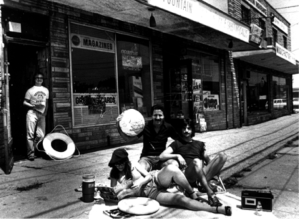
Although we had a great time poking fun at our religious training, all kidding aside, it seems we all share a steadfast faith. As we were catching up on our lives as adults, many of us found ourselves on our knees praying for ailing parents, challenging children and financial  stresses. Despite the relentless voice of Sister’s “Nun of this and nun of that,” we all agreed that St. James School did provide us with a moral compass and code of behavior.

NewSlicerGraphic

The Neighborhood Watch #SOL17

As mentioned in an earlier post, I grew up in a tight knit neighborhood, filled with baby boomers and friends that were as close as family. Safety and freedom were never an issue – kids played independently and our doors remained unlocked. This slice recalls an incident when that comfort was interrupted, but with a humorous twist! I will refer to my mother as Annie T, a term of endearment.

Every Sunday night, my family of five would squeeze into the TV room to watch our weekly shows. Some of our favorites were Lassie, The Wonderful World of Disney, Jackie Gleason, featuring the June Taylor Dancers, and believe it or not, The FBI – in color! I’m not sure if I loved the show or the actor, Efram Zimbalist Jrfbi. My mother, an avid reader, loved mysteries and detective stories, so The FBI and others topped our list. Other shows such as Mannix, Colombo and The Streets of San Francisco followed later, and of course her favorite, Hill Street Blues was a staple in the 80’s.
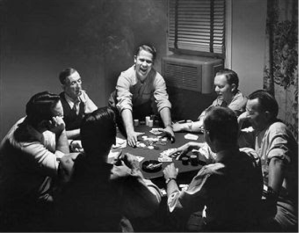
Her love for the intrigue and mystery of crime began in her childhood. Raised in a raucous Irish home, she was the daughter of a bookie, who sold newspapers on a corner in Jersey City and owned a candy store as well. Both acted as “fronts” to maintain my grandfather’s side business. pokergameMy mother and aunt would work up front in the store, while my grandfather organized poker games in the back. Most of the card players were cops and councilman from neighboring towns. According to my mother, who loved to embellish stories, there was even a button under the counter in case there was a bust, giving those in the back a chance to get out. You can easily see where her love for this type of drama grew. Little did she know then, that she’d get a chance to play “cops and robbers” in our own neighborhood.
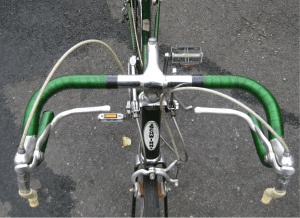
Like most kids at that time, we treasured our bikes. Sting Ray’s, Cinderella’s and Schwinn’s littered the street in a variety of styles and colors. Unless we saved up our own money, our bikes were given as Christmas gifts or for special occasions such as birthdays, Communions/Confirmations and graduations. New bikes were paraded around proudly while everyone gaped at the sleek colors and dazzling chrome – prized possessions in the gateway to independence. But sometimes that independence came at a cost as my brother Michael soon discovered.

scwinnhandlesMichael and his buddies were riding a little ways from home near the river. Leaving their
bikes on the side of the road, they were scaling the bank exploring the current. A few minutes later, there was a rustling above them. “Hey, did you hear that?” Michael asked. His buddy Roy looked up and shouted, “They’re stealing a bike!” By the time they reached the top, the boys were gone – two of them, one riding on Michael’s bike. “Quick! Hop on the bar!” said Roy. The two of them along with the rest of the crew, hopped on their bikes and took off.

As Michael and Roy neared our house, they yelled to my other brother to get my mother. Annie T sprung into action. Keys in hand, she had just gotten a call from a neighbor down the street that two kids, strangers, were riding bikes; one of them was on Michael’s new bike. Annie T told us to get in the car. Eight kids squeezed into the back seat and back benches of the station wagon. She peeled out of the driveway, careful not to hit the pile of bikes cheering us on from the sidelines.

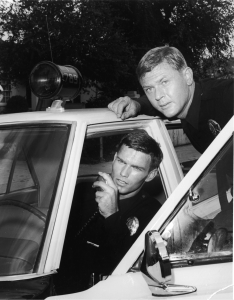
adam12As we passed our neighbor’s house, we noticed they were slightly ahead of us already in pursuit. If our car had a police radio, you could almost imagine the dispatcher’s voice. “1 Adam 12, 1 Adam 12, two males riding bikes headed down Riverview Drive nearing Union Boulevard. Suspects approximately twelve years old, wearing jeans, one riding a green ten-speed Schwinn.” I’m not sure how we didn’t catch up or pass them, but the chase finally ended in the Two Guys parking lot. Officer Annie stayed with the young culprits, while our neighbor got help inside. The neighborhood watch did their job. Although the doors of our home remained unlocked, we made it a point to lock the shed!

NewSlicerGraphic


The Sounds of Silence #SOL17

In this slice, I take pause to think about how my mother unknowlingly influenced my desire to write. That coupled with an innate desire to be heard is why I have kept journals my whole life.

“Long before I could really write, someone must have known that this was all I needed.”        (“Composition Notebook” by Jacqueline Woodson)

 It was my mother who knew that writing would be an outlet for me. Long before I filled diaries with adolescent angst, I had always been curious about the physical act of writing. After watching her sign my name on family Christmas cards – Dominick, Ann, Michael, Joseph and Laurie Ann – I was intent on imitating the swirling loops of the letter “L”, until print-vscriptI got it just right. In contrast to my mother’s free-spirited cursive, my father, a draftsman, wrote with sharp lines – precise, exact – the opposite of my mother’s, and in hindsight, a reflection of their personalities as well. One was able to “go with the flow,” while the

other required order and routine – both influenced me greatly.

Although I could write in both ways, in kindergarten I insisted on writing using only capital letters arguing, “What’s the difference? It’s still my name.” That’s the kind of lawyering I brought to every moment of injustice I faced. Every single paper that came home that year was corrected from LAURIE ANN to Laurie Ann. Was I too stubborn to change, or were those early indications a felt need to express myself, a desire to leave my mark on something?

Growing up in a home where praise was not regularly dispensed, somehow I sensed mytimex mother’s pride in my writing. One memory I can recall is when she shared my 5th grade writing with her friends from work. Our teacher, Sister Patricia Mary, a fan of creative writing, asked us to write the autobiography of an inanimate object. My character, a Swiss watch, aptly born in Switzerland, was put through grueling trials in order to prove her worth. One morning she woke up in the chilly air and was submerged into the icy waters of a pond, mirroring the famous 1970’s ad-line, “It takes a licking and keeps on ticking?” It’s funny how the motto of my watch-friend is shared by writers… those who take pen to paper every day struggling for acceptance, facing criticism, all in the hope of getting published some day.

annfrankDespite the fact I only have that one public memory, I do know my mother revered words and language. She herself, an avid reader, was rarely seen without a book and cigarette in hand. She honored reading, respected libraries, and on the rare occasion we got something outside of a birthday or Christmas gift, she bought us books. Beyond the popular titles of Mrs. Piggle Wiggle, and the Nancy Drew and Hardy Boys mystery series, two books she encouraged me togoaskalice read as an adolescent were Ann Frank: Diary of a Young Girl, the extraordinary life of a girl living in hiding, and Go Ask Alice, a lesson on the perils of drug abuse – memoirs of tragic lives which remain with me till today.

Pieces of their stories showed up once in a 7th grade paper I wrote reflecting on the Sounds of Silence, an assignment from Miss Joyce, who had finally had it with my incessant talking, calling out, and general rebellious behavior. As a punishment, she told me to go home and write about that topic  – a brilliant move on her part. Later, after my mother passed, it showed up in one of her drawers alongside another piece I wrote reflecting on the death of Aunt Ida, my mother’s best friend and neighbor, who died of cancer leaving three young daughters. The fact that she treasured those pieces speaks volumes of her approval.

How did those books influence me? Why am I remembering them now when I am “writing about writing?” It’s not that those books are the reason I write, because I was too young to notice, but reading about Ann and Alice helped me to discover that I prefer the raw truth that emerges from tracking a life.

NewSlicerGraphic


Kindergarten Charades #SOL17

This memory is the one my children, nieces and nephews love to hear. Since my mom, their grandmother, passed away at the ripe young age of fifty-nine, they have few of their own memories of her, so they appreciate when my brothers and I share. My mother was a character. At times I will refer to her as Annie T – a term of endearment for her feisty spirit. 

“So, Laurie Ann, how old are you now?” Mrs. Sullivan asked. My mother and I were at Shop-Rite on our weekly shopping visit. It was just the two of us, since my brothers were at school. Lucky me; this meant, I wouldn’t have to share the chocolate chip cookies.

“I’m four and a half. I’ll be five in October,” I shared, licking the melted chocolate from my fingers.

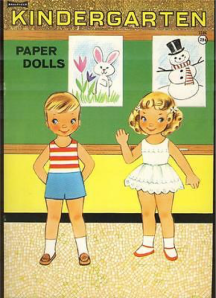
“How wonderful,” she smiled, “Soon you’ll be heading to kindergarten!”kinderpaper

I turned around in the shopping cart, in full view of both mothers, “No – I won’t be going to school. Mom said I can stay home with her instead,” I proudly announced, sneaking a glance at my mother to confirm what she promised.

“That’s right,” my mother responded, smiling at Mrs. Sullivan. “I told Laurie Ann if she doesn’t want to go to school, she doesn’t have to. She can just stay home with me.” Mrs. Sullivan returned her smile with a knowing nod, acknowledging this important fact.

That’s how it went from spring through summer. Everyone was asking me about school, while my mother and I firmly shared that I wouldn’t be going. We would remain partners at home, doing as we pleased. Playing cards, watching game shows, baking cupcakes, and eating baloney sandwiches. Imagine my surprise that September morning, when I woke up and heard her announce that it was time to get ready for school. A new dress, maroon with polka dots, hanging alongside patent leather shoes were at the ready, waiting to make their debut. Bewildered, I asked her why, insisting we already had this worked out. She casually mentioned that we had received a letter from my teacher inviting me in, and that maybe we should check it out. Smooth move – Annie T was always quick on her feet. Ok, I thought. This is only temporary. Once the teacher realizes her mistake, I’ll be back home in no time, playing with my dolls, picking up where we left off yesterday.

So, I went along with her game. I got dressed, ate breakfast, and posed for the usual “first-day of school” pictures alongside my brothers and neighboring friends. When the bus pulled up, I looked over at my mother. She assured me she would follow me to school. I quickly moved to a seat further back on the bus and watched her driving behind me, my eyes glued to our blue station wagon, never letting it out of my sight.

Bus number three pulled up, and true to her word, my mother was there to meet me. My brothers remained on the bus, waiting for the second stop at St James School. I’m sure they were snickering under their breath, imagining the next few scenes. After saying hello to other moms, and snatching a few more pictures, my mother took my hand, and together, like partners in crime, we walked through the vast doors of Memorial School. I was confident, or at least hoping, that in just a few short moments, the charade would be over.

kinderclassIt was a quick walk up the stairs followed by a hard right. There in front, ready to greet us was Mrs. Moorehead, a petite woman with a gentle face and warm smile. She reached out her hand to me to coax me into the classroom. Glued to my mother’s side, we inched forward. Under some mysterious spell, Mrs. Moorehead managed to shuffle me through the room to the other side, away from the door, where my mother remained. Wait a minute, I thought – what’s going on? With my eyes peeled on my mother, the teacher pinned on my name tag. But I’m not staying, I thought. My little heart was pounding in my head. Rather than exiting gracefully, my mother impishly waved at me and said, “Bye, bye, Laurie!” Frantic, I screamed  – “No!” and began sobbing … uncontrollably at first, and then to a quiet whimper. According to my mother, I got over it pretty quickly. When I returned home later, she asked me, “How did you like school?” Not to her surprise, I replied, “I loved it!”cryingkinder

When asked why she maintained the charade for so many months, Annie T had a logical answer. “Why upset you for months on end, when it could be handled in one single moment,” she claimed in her matter-of-fact tone. “Besides, I knew you would end up loving school.” She had a point… The call to teach came later in my life, but mothers are always right.

NewSlicerGraphic


Kitten Crime #SOL17

In keeping with my goal of tracking family memories, here’s another. Although this is drafted more like a personal essay, I may revise it into a narrative. For now, I wanted to set-up the setting, so that my children, nieces and nephews can get a glimpse into the neighborhood where my brothers and I grew up.

As a child of the sixties on the tail end of the bab-boomer generation,  I grew up in a tightly knit neighborhood filled with friends that were my extended family. Like every strong community, we celebrated together and supported one another through challenging times. We even had an unwritten rule of referring to the adults as aunts and uncles, reinforcing that closeness. Most of the moms were home managing the house and tribes of children, while the dads went off to work either to the office or to the trades. No matter where we played, our community embraced a collective code of conduct, which was shared in our homes and churches.

worldplagroundFor the most part, we entertained and refereed ourselves – riding bikes, climbing trees, hitting balls, playing tag,  – pool hopping in the summer, and sleigh riding in the winter. We also wrote and performed plays, using old curtains as costumes and boxes for stage furniture. One year we decided to raise money, through a series of craft-making and show-making fundraisers, to rent a house for a week “down the shore.” With acres of woods behind us, plus a playground around the corner, there was always something to do and someone to play with.

carnivalOne summer, we turned our attention to philanthropy and decided to run a carnival for Jerry’s Kids, an organization founded by Jerry Lewis to raise money for muscular dystrophy. The starter kit came complete with game ideas, signs, and tickets. The rest was up to us. Like everything else, we did it ourselves. We met weekly to organize the games, design the layout, gather materials, develop a schedule and create posters to promote the event.

Although I remember playing many games, the one booth that stands out in my mind the most was a raffle to win a kitten. It was a late addition, and the tickets were only 20 cents, but I was out of luck having spent all my money. Disappointed, I walked home to plea my case to my mother and ask her for the money. Although Annie T (the adult name my brothers and I gave to our mother) was uncomfortable in saying no, she refused my request immediately, claiming she was allergic to cats. Suspicious of her reason, as she was known for making up stories, and refusing to take no for an answer, I asked again promising to take complete responsibility for the kitten, to feed her, change her litter box, and comb her daily. With a quick “No!” she turned and left, leaving no room for a rebuttal.

Sulking, I ate my lunch in silence, playing with my food on the tray in the TV room. As I was finishing up, I noticed two dimes sitting on the side of the coffee table – beckoning me, teasing me, calling my name. I thought long and hard, knowing that if I took them, it would be stealing. I wanted that kitten at any cost – any cost. In one ear, I heard words cautioning me to do the right thing, while in the other I heard my own voice convincing me that I deserved that kitten. After a long pause, I snatched up the dimes, and headed back to the carnival, intent on getting a kitten, black-dotted soul and all. I’d worry about confession and penance later.

raffleAfter paying the fee and entering my ticket, I had to wait until the close of the carnival to learn my fate. I bid my time walking around, daydreaming about that kitten. I planned on naming her Little Friskies, after the only cat food I knew. She would join my stuffed animals and rest on my bed at night. She would be the sister I’d wished for.

As luck would have it, there were only three entries and two kittens. The odds were definitely in my favor. As the carnival came to a close, and the winners were announced for the “count the gum ball contest,” and the Rock’em Sock’em Robots game, the ring master moved to the kitten raffle. I crossed my fingers and closed my eyes, hoping to be called. The first ticket was pulled out of the jar, “989124,” he announced. Not my number. OK, I have one more shot. He pulled the next one, “989147!” What? Not my number!! How could that happen? I was crushed watching those two little kittens get placed into the arms of others. Little Friskies would live in someone else’s home. After the shock and disappointment of losing seeped in, I realized my mistake. Crime really doesn’t pay… See you next Friday, Father Reilly!

NewSlicerGraphic


Drama at the Drive-In #SOL17

As the K-5 literacy coach in my district, I receive a great amount of professional development and in turn, offer workshops to our teachers. One of my favorites was one led by Amy Ludwig Vaderwater entitled, “Teacher as Writer/Writer as Teacher,” based on the TCRWP philosophy which believes that in order to be an effective writing teacher, we must live as writers. Although I am an avid follower of Two Writing Teachers blog, I have never participated in the weekly SOLSC or in the March daily challenge. However, since I am home healing from a recent injury, I have no excuse. My objective is to begin drafting family stories, with the ultimate goal of publishing a photo journal for my family.

“We didn’t realize we were making memories, we just knew we were having fun.”

One of the funniest things about memories is how different they are remembered by those who were involved in the story or were witness to it. That’s particularly true with siblings, especially when it involves blame – and in my case, as the youngest of three and the only girl, I managed to dodge the finger-pointing more often than not.

“Can we, mom? Please? Please? ” with hands clasped together, Joey and I pleaded with our parents to let us go to the playground. It was intermission at the Totowa Drive-In, “Sleeping Beauty”  driveintheaterended, while “The Trouble with Angels” was in cue. Families flocked to the snack bar to grab cokes, candy and coffee, or in our case, to replace spilled beverages, now worn on Joey’s footie pajamas alongside the car mats in our station wagon. At six-years old, my accident prone brother was already on his fourth life, fast-tracking my mother into her ninth.  Exhausted from the already endless summer mom gave in. “Ok. Ok. Watch your sister, and make sure you’re back before the movie begins!”

Not waiting to hear it twice, we shot off into the distance, scattering across the gravel, racing to reach our destination, our mother’s words lingering on the breeze. “Watch your sister…” At six and four, we had no business being on our own, but in our 1966 world, freedom and safety were a given – not a concern. Hidden by the shadow of the slide, the teeter-totter, our destination, hung from a rusty chain centered in the midst of neon painted bars. Lucky for us, it was open, as kids and parents were already scurrying back to their cars, a sign we should have noticed. We leaped onto the seats, balancing ourselves to distribute the weight evenly, guaranteeing a good ride.

intermissionLeaning back, staring into the night, I screamed to my brother, “Go faster!” He responded in like, pumping his feet – the two of us whirling around in reckless abandon, spinning so quickly, neither one of us noticed the spotlight blink, indicating it was time to head back. Slowly the lights began to dim, and in one final flash, it went black. “Joey!” I shouted. No response. “Joey – where are you?” I continued, my voice shaking, hoping he was there, hiding in the shadows, playing another practical joke. “Joey! Stop teasing me! Where are you?” It wasn’t long before I realized he was gone and I was alone.



Complete and utter panic set in. Heart pounding , eyes sobbing, I began searching aimlessly for my family, wandering down rows and rows of cars. Nothing was familiar – every sight, every sound, every smell…  all looked the same. In my four-year-old mind, it felt like hours had passed, before a friendly young couple, scooped me up. And on our way to the “lost and found children,” we ran into my parents. “My baby!” Fifty years later, I can still see recall that moment; my mother was a wreck, my father was angry, two reactions to fear – both assuring me then that Joey took the blame.

Years later, when I was sharing that story with my children, nieces and nephews, my brother shared his version… He said, that while we were on the teeter-totter, the projection screen lit up with the familiar, “Two minutes to show time!” song led by the dancing fries, hot dog and soda trio. He told me we had to go, but I protested and refused to leave – determined to extend my play time. After several attempts, he did as he was told, “Get back before the movie begins!” but, he failed at the family rule, “Watch your sister!” Thanks for taking the fall – the first of many. Sorry, big brother!

NewSlicerGraphic

Honoring the Process and Product of Writing

For the last seven weeks, I’ve been home recuperating from two surgeries.  The first was planned, to repair a torn ligament on my foot, while the second, my gallbladder removal – Bonus! was not.  What started as a disruption to daily routines grew slightly worse.  Throw some crutches into the mix alongside a rambunctious black lab, the instigator of the foot injury, and you can imagine the challenges.  To pass the time as a respectable literacy coach should, I initially planned to catch up on reading and prepare for upcoming workshops.  But the truth is… I didn’t do much of either.  TelevisionFor whatever reason I struggled to maintain focus on print, but instead fixed my eyes in front of the TV.  Although I wish I could say I watched documentaries, or binge-viewed one of the many epic series, I found myself wandering aimlessly through the channels lingering far too long on E! and HGTV.  So now, along with Project Runway, I’ve added two new favorites – Fixer Upper and Rehab Addict.

ProjRunKini

The workroom on Project Runway – creativity in progress. Tim Gunn is conferring with a designer.

The basic premise of all three do-it-yourself shows is to create or reimagine something new from scratch; the only difference – the canvas.  Unlike Project Runway, which is a fashion competition, Fixer Upper and Rehab Addict are about restoring/remodeling homes.  In most cases the home designers work within defined spaces, self-manage their time and have free reign to create, whereas the fashion designers are tasked weekly to think, sketch, create, style and present clothing in a particular genre within a regulated time frame.  Hmmm… Week after week they put themselves through this grueling cycle, often facing scathing criticism or worse, elimination. Sometimes they take risks, which pay off, and other times they play it safe, afraid to honor their authentic point of view.  And always, self-doubt is on the sidelines, waiting to creep in to expose a vulnerability.  Sound familiar?

Nowhere is this more apparent than in writing and in the teaching of writing.  Regardless of age or ability, all writers experience anxiety from time to time when faced with a blank page.  Sometimes the ideas and words flow easily, while other times they don’t.  Most adults can work through the struggle, or at least find a diversion – like organizing the spice cabinet, or the sock drawer, or the linen closet, until the crisis is averted.  Unfortunately, our youngest writers don’t always have that freedom, especially given the current environment of testing and evaluation where the lines between process and product can easily become blurred leading teachers to stress over the priority.

As is commonly known, the writing process was revered and defined by the work of Donald Graves, who discovered that children follow similar routines as adults do in the cycle of writing.  Careful not to name it as a sequential order of events, Graves said, “When a person writes, so many components go into action simultaneously that words fail to portray the real picture.”  Translation:  The writing process is not linear.  Writers, like other artists, dip in and out of process elements making it far more fluid.  WritingGraphicThis work was shared and extended by Lucy Calkins in her seminal work, The Art of Teaching Writing, where teachers were urged to “shift attention from product and surface features, to an equal concern with process and meaning.”  This belief ultimately became the crux of the writing workshop philosophy, researched and refined by members of the Teachers College Writing Project; a movement founded by educators, writers, and poets interested in studying their craft, and honoring its importance in the elementary classroom.

Over the past few years, the structure of writing workshop has changed.  Rather than spending an extended amount of time developing a single piece of writing, students are taken through bends or scaffolds to practice and develop several pieces of writing.  The purpose of this change is twofold: (1) to develop stronger writing skills alongside genre knowledge, and (2) to emulate the real world where on-demand writing is often expected. This ensures that students get more practice cycling through the process, so that the writing itself becomes more automatic.  Although it is reasonable and educationally sound to implement writing instruction in this way, it has changed the culture and tone of workshop.  Instead of the contented buzz of children proudly tending to their authored pieces, workshop can feel a bit more frenetic with children racing to complete a task.  The result: children may not be spending enough time developing their revision skills.  The ability to produce writing automatically is critical especially as students move through middle school and beyond when responding to content-driven inquiry, but equally important, and not to be forgotten, is the capacity and desire to create and develop quality writing.  Even given the best intentions, our teachers are under so much pressure to push product over process, especially when end-of-year standards are expected in a mid-year state assessment.

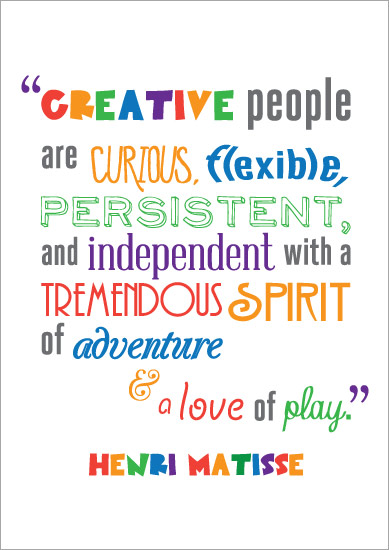
So, what can we do?  How do we strike that balance between product and process in our coaching and writing instruction?  How do we honor the creative art of writing alongside its academic demands?  With the artist Matisse in mind, here are my thoughts:

CreativePeople

  • Define the differences for our students. Creative people are curious.  Our students want to understand the expectations regardless of the task, and it’s our job to make it clear to them.  There will be times when they’ll need to write toward a short term goal, and other times when it’s appropriate to linger in the process and develop a piece of writing.  It always comes down to audience and purpose.  Who is going read it? and What is the expectation? Being clear on those two points is the key to both planning and crafting the writing.
  • Plan time for both types of writing. Creative people are flexible, persistent and independent. Our students need the opportunity to practice writing in both ways, but it’s up to us to provide that space in our curriculum and classrooms.  One way to achieve this is through following the process shared in the Teachers College units, where the bends provide scaffolds to support parts of both product and process writing.  Appropriate planning and timely feedback are key; both need to be fully addressed.  Another way is to move through the objectives of the unit four days a week, while setting aside one day for independent writing, or any other plan that honors time for choice and elaboration.  This would provide an opportunity for our students to work on a self-selected piece of writing within any genre, in order to develop stronger revision skills.
  • Celebrate often.  Creative people have a tremendous spirit of adventure and love of play.  If we want to honor both product and process, then we need to celebrate both.  A celebration doesn’t need to be a publishing party, nor does it require all the bells and whistles.  Although celebrating our end goal accomplishments is certainly powerful, honoring achievements along the way holds equal weight.  When we can open our notebooks and share our “ideas in process” to a supportive audience, we are learning to trust one another, which naturally aids in creating a community of writers.  A community where all members mutually become teachers and coaches.

The on-demand tasks required by the Project Runway contestants do not necessarily yield the best results, but week to week the designers find their stride and learn more efficient ways to create their art.  This practice hopefully leads them to the ultimate goal of presenting a collection at New York’s Fashion Week.  A collection which represents a body of work they’ve been planning for a while in their hearts, minds and sketchbooks.  A collection they’ve had months to create with skills they’ve learned along the way from experience, practice, and their community.  A collection that represents a culmination of craft, artistry and form.  It’s painful to watch a designer or writer struggle when they’re stuck, and it’s equally challenging to expect high creativity against a time clock.  But, regardless of purpose, it’s comforting to remember that inspiration often follows a commitment to practice.

Believe in the Power of One Little Word

Last Saturday, I joined my niece and sister-in-law to shop for my niece’s wedding gown.    To say it was a special day would be an understatement.  As Kristin’s doting aunt, her favorite she assures me, and a closet fan of everything bridal (as well as Project Runway, What Not to Wear, Fashion Police), I was thrilled to participate and add drama to “saying yes to the dress!”  wedding pinkIt was magical; the possibilities were endless… so many styles, so many fabrics, so many shades of white (no grey, keep it clean people).  Every gown, gorgeous…Every moment, emotional…All leading up to the tearful final choice.  Kidding aside, sharing in the start of Kristin’s wedding journey, filled me with hope and fueled me to finally initiate my own beginning.

After procrastinating for six months, I am ready to launch my blog.  Although it’s a bit intimidating – actually scares me to death to publicly share my thoughs, I know it’s necessary in order to be considered an authentic writing teacher.  Rather than create lofty goals, (after all there’s a wedding to plan) I’ve decided to use the forum of the One Little Word community as a means to stay on track and focus my posts.  According to Ali Edwards, the originator of this brilliant idea, “One Little Word is about pinpointing one guiding principle and then walking with that word throughout the year.”

Long before I learned about the OLW practice, my word, believe, actually found me.  It was just one of those coincidences that started with an unusual autocorrect on my phone.  In short, here’s what happened.  While I was composing an email one afternoon back in October, the word @believe popped up out of nowhere; I wasn’t attempting to spell a word anywhere near believe.  That incident was followed by an immediate chain of events, which concluded with a call into a local radio station, not for concert tickets I’m afraid, but more importantly, for hearing a profound message.  As often happens in life, assistance appears from unlikely sources often in the guise of comforting words.  Believe has followed me ever since, paving the way for this process and blog launch.

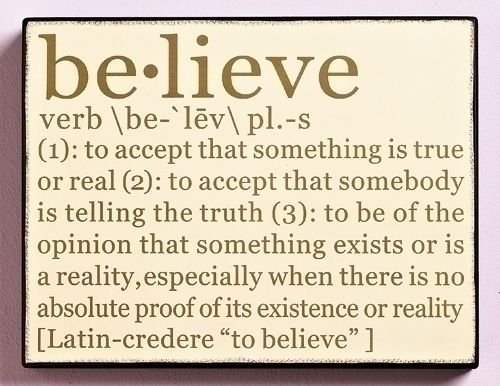
Following suggested prompts by Ali, I began my reflection by defining the word believe and finding quotes to support my interpretation.  In my search I came across this simple definition.  pack-of-4-definition-of-believe-wall-plaques-11I really like when information comes in threes, especially since I plan on focusing this practice in my personal, professional and spiritual life.  Reflecting further on my word, I explored the question, “What do I want to invite into my life?”  Although initially my list ran off the page (blame it on hopeless optimism coupled with lingering wedding bliss), I managed to reduce and sum it up in the following statements:

  • To express my personal beliefs authentically and creatively
  • To clarify and communicate my professional beliefs
  • To strengthen my spiritual beliefs by further exploring my faith

In reflecting on my personal goals, I’m guilty like many educators, in putting my work life ahead of my home life.  However, when work is a calling or vocation like the teaching profession, the lines can become blurred.  On one hand, I am fortunate to be immersed in the literate life, which is both creative and authentic.  On the other it can become all-consuming, to the point where one can easily forget personal pleasures that bring joy.  My shopping excursion on Saturday was a reminder to me on the importance of family and authentic relationships.  Since my daughter Dana will be Kristin’s maid of honor (sister cousins), this wedding will truly be a family affair, and naturally provide moments to enrich my life and indulge my creativity.  Likewise, this blog will also serve as a means for authentic expression, as I plan on melding posts driven by both professional and personal interests.

Professionally, I am quite content, yet never want to become complacent.  Switching careers back in 2002, was a huge decision, but one I’ve never regretted.  After teaching 5th grade and 7th grade, I stepped into a newly created role in my district as the K-5 Balanced Literacy Coordinator, aka the literacy coach.  Although I love assisting teachers with literacy initiatives, I miss the classroom, a sentiment shared by many coaches, including Melanie Levy, a coach who recently returned to the classroom – her post is a must-read.  Beyond the void of student/teacher relationships, a priceless gift, I also miss having a forum to put my new thinking into practice.  Therefore, in order to preserve an honest perspective on classroom practices, I need to be careful not to impose my beliefs onto others.  After all, elementary teachers are charged with implementing every single subject, a challenging feat to say the least.  And although literacy is an all day event, it should enhance rather than consume classroom practices, especially when it comes to assessment.

From a spiritual perspective, exploring my faith has been a lifelong process.  Raised in an Irish/Italian household, parochial school was a standard; better to have the nuns deal with the messy work of discipline, especially with the Tafuni children.  Despite my rebellious nature, and weekly visits to the principal, where, by the way, I marched past my mother who was the school secretary, (I know), St. James School did provide me with a moral compass and code of behavior.  It also left me with many unanswered questions.  This year I will continue to study with my prayer group, as an active member of the ultimate book club.  Where else can you find mysterious, inspirational, and controversial stories?  I started this endeavor with my cousin Judy, who like the rest of us, is really struggling with the concept of fate versus free will.  The best argument she posed to date is that Judas was set up.  According to Judy, if God has a plan for all of us, and knows the outcome before we do, then how did poor Judas ever have a choice?  You can only imagine the discussions when so much of what we are supposed to believe relies on faith!

Believe StoneIn truth, just like wedding vows, it’s simply not enough to have beliefs; it’s far more challenging to act on those beliefs and put them into practice.  Believe is a powerful verb.  On this year-long journey, I am hoping this word will steer my course, aiding me to discern my priorities, speak my truth, and take action accordingly.

Special thanks to close friends and colleagues, Lisa Kruse, Jonathan Olsen, Danielle Soldivieri, and Jennifer Serravallo, for helping me to develop and focus this blog; your honesty and encouragement was/is greatly appreciated.  Thank you also to Amy Ludwig VanDerwater, aka The Poem Farm, for leading a group of educators last summer in her workshop, Teacher as Writer, Writer as Teacher.  The guided practice you provided assisted my writing practice long after the workshop ended.  And to Colleen Cruz and Mary Ehrenworth, my go-to writing teachers @TCRWP summer institutes, whose leadership has informed the whole of my classroom instruction on the teaching of writing.  Finally, a shout out to Michelle Haseltine, whose post on OneGratefulTeacher, led me to discover the gift of One Little Word.